
This Sucuri review is about the security service that cleans a hacked site rather than just blocking attacks: 229 USD a year for scanning and a firewall, 549 for the tier with the fastest cleanup response, and a business model built on the worst day of a site owner's year.
Prices are from sucuri.net/pricing, read 24 November 2026, USD per year. No account was created, so this is a research-based review with no score - the rule is in how we test.
What Sucuri is
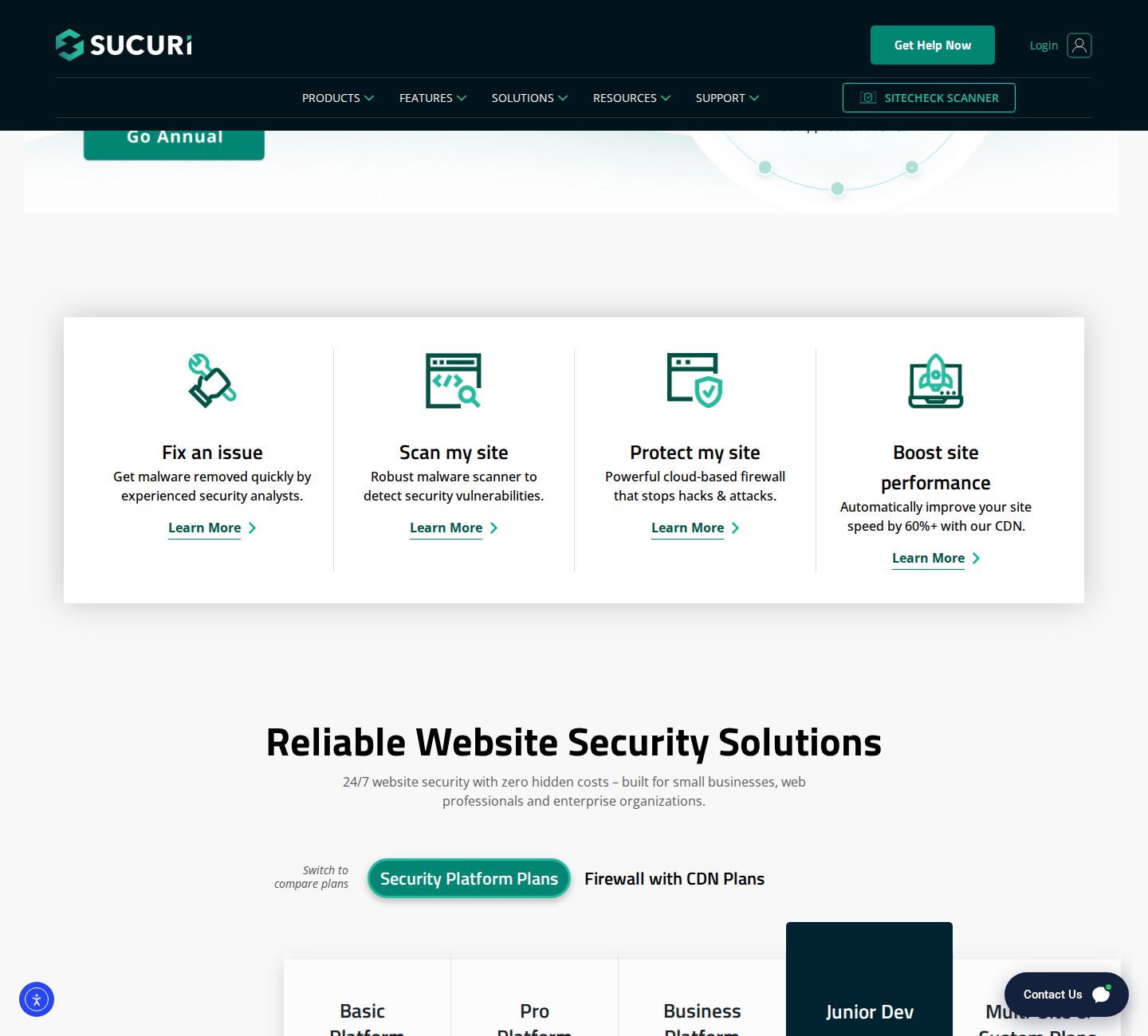
A website security service in three parts: a cloud firewall with a CDN that sits between visitors and your site, malware scanning that looks for known bad code, and manual malware removal by a team that logs in and cleans the site after an infection. The last part is what people pay for, and it is why Sucuri occupies a different slot from a plugin like Wordfence: a plugin blocks, a service cleans.
The honest framing is that these are two purchases. Before an infection you buy prevention; after one you buy recovery, and the recovery is priced by how fast you need it and whether the fee is one-off or annual.
Pricing, precisely
| Plan | Price | Notable |
|---|---|---|
| Basic | 229 USD/yr | scanning, firewall and CDN, occasional cleanups |
| Pro | 339 USD/yr | SMB focus, faster support, SSL transfers |
| Business | 549 USD/yr | fastest cleanup response, frequent scans |
| Junior Dev | 999.98 USD/yr | 2-5 sites, for freelancers and agencies |
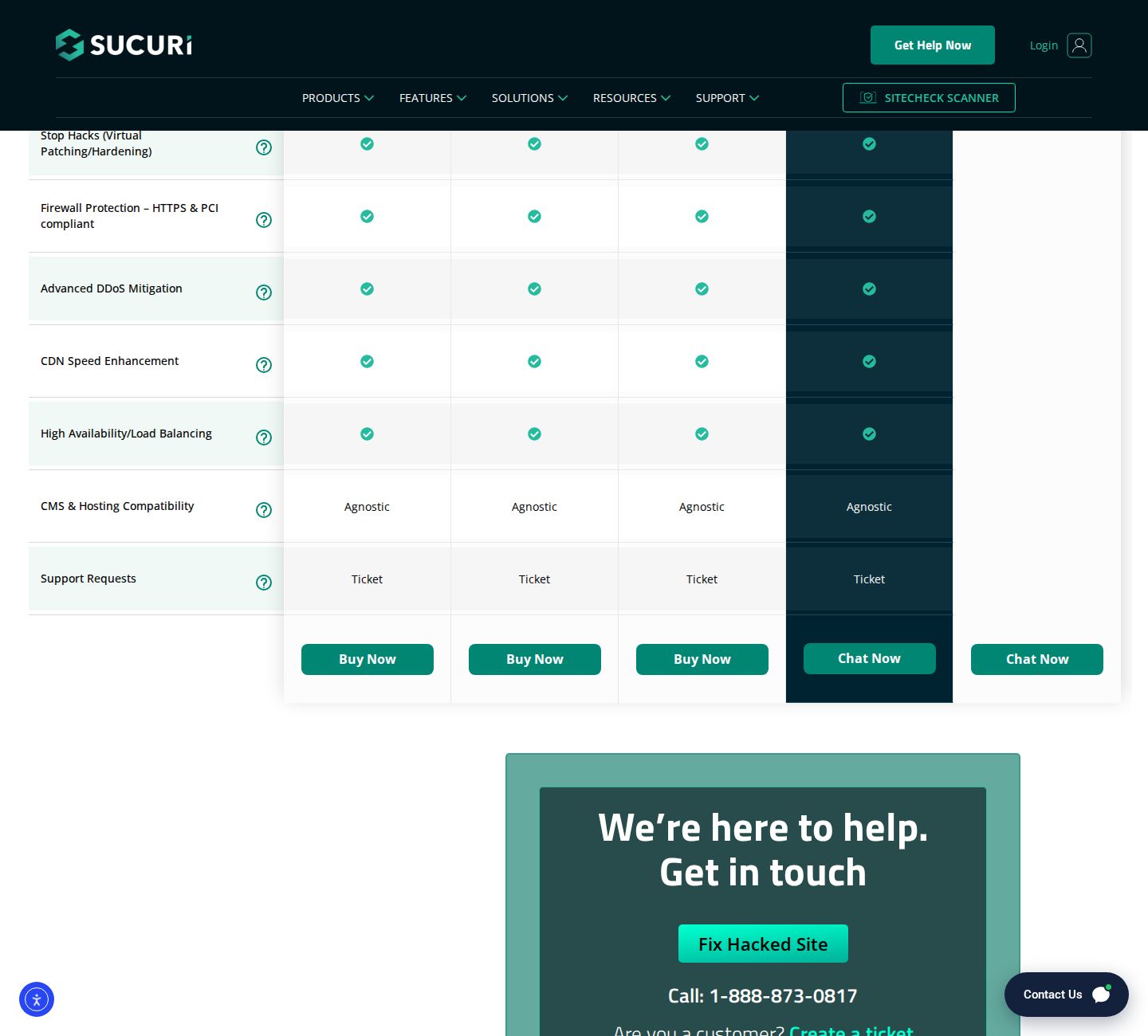
The structure to understand is per site per year, with cleanup included in the plan - unlike a plugin where removal is your problem. That inclusion is the product: a hacked WordPress site costs either days of your time, a freelancer's invoice of several hundred dollars, or a Sucuri plan, and the plan is often the cheapest of the three.
The jump from Basic to Business (229 to 549) buys response time more than features, which is the one dimension a hacked business genuinely cares about: hours of downtime during business hours cost more than the annual difference.
What it does well
Cleanup by people, not by algorithm. When a site is infected, a scanner that removes known signatures is not enough - the backdoors are custom. Sucuri's team logs in, finds them, and produces a report. That is the service behind the price, and it is the reason agencies keep a licence for their worst clients.
A firewall that blocks before the request reaches WordPress. Because it sits in the cloud, it filters traffic before your server spends CPU on it - which also helps performance during an attack rather than collapsing under it.
Post-cleanup reporting. Knowing what was changed and what to fix is the difference between cleaning a site and cleaning it once; the report is what a developer needs to close the entry point.
The Junior Dev tier. 1,000 USD a year for two to five sites is a real offer for a freelancer, priced per agency rather than per site - unusual in this category.
Where it fails
- Per-site annual pricing gets expensive for a portfolio: five sites on separate plans is over 1,000 USD.
- No cheap entry. 229 USD is the floor, where a plugin can be installed for free.
- You are still responsible for the site. Cleaning malware does not patch the vulnerable plugin that let it in, and repeat infections are priced the same as the first.
- The firewall is a proxy, so a misconfiguration can break things and debugging means testing through their edge.
- Annual billing only - there is no month-to-month option, which is awkward for a short project.
How it compares
| Entry price | Model | Cleanup included | Best at | |
|---|---|---|---|---|
| Sucuri | 229 USD/yr | per site annual | yes | recovery and a cloud firewall |
| Wordfence | 149 USD/yr | per installation | no, premium guide only | prevention with real-time rules |
| MalCare | 49.50 to 99 USD/yr promo | per site, cleanup on higher tier | on Repair tier | prevention plus cleanup, cheaper |
| Host with WAF | in hosting plan | bundled | sometimes | nothing to manage |
The comparison that matters is Sucuri against MalCare: MalCare is cheaper and bundles cleanup on its Repair tier, Sucuri's response is faster at the Business level and its firewall sits in the cloud rather than on the server. For a business whose site is its revenue, the response time is what the money buys.
Who should buy it
A business site that has already been hacked. The cleanup and the report are worth the year on their own.
An agency with a handful of client sites - the Junior Dev tier at five sites is the price point to compare.
A site under sustained attack where the host's firewall is struggling; a cloud firewall takes the traffic before the server does.
Who should not
A brochure site with no logins, where Wordfence free plus nightly backups covers the realistic risk. A business already on managed hosting with a bundled WAF and clean-up guarantee - you would be paying twice. And anyone who wants to manage the fix themselves; 229 USD is a lot if you know how to clean a site.
Questions people ask
Is a cleanup included in the plan? Yes, that is the product - the Business tier just gets a faster response than Basic.
What happens if the site is reinfected? It is covered again, and the report tells you what was reopened - the honest answer is that repeat infections usually mean the cause was not fixed.
Does the firewall slow the site? It adds a hop but caches static assets, so most sites get faster; the risk is misconfiguration, not latency.
Is there a cheaper entry tier? No: 229 USD a year is the floor, and it is priced per site.
Can I buy insurance without the firewall? Not in the current plans - firewall, CDN and scanning are bundled.
What we have not tested - and will
The checks that would produce a score, all needing a licence:
- Time from a real infection report to a clean site, on the Basic versus Business tier
- Whether the post-cleanup report actually identifies the entry point in a typical plugin vulnerability
- Firewall blocking accuracy: attacks stopped against legitimate traffic broken
- TTFB before and after the CDN, measured from two continents
- Behaviour during a volumetric attack, which is the scenario people buy it for
- Cleanup quality on a site infected with a custom backdoor, not a known signature
- What happens at renewal if the site was never infected - is there any value argument left
Bottom line
Sucuri sells recovery, and prices it per site per year: 229 USD for scanning and firewall with cleanup, 549 for the response time a business actually needs. It is not the cheapest way to prevent an infection, and it is the cheapest reliable way out of one.
Buy it before you need it only if you have already been hacked once. Otherwise start with Wordfence free or MalCare, keep restorable backups, and know that 229 USD is the alternative to a much worse day.
Every vendor link on this site is disclosed in the affiliate disclosure; a commission never changes a score. Our rules are in the editorial policy, and the rest of the reviews are in the review index.
One practical note: the plan you buy should match the day you fear, not the day you have. A site that sells nothing can wait for a Basic response; a shop that loses orders by the hour during an outage should price Business against one hour of downtime, which is usually more than the annual difference.
A last note on renewals: the price you see in year one is the price of a decision, and the price in year two is the price of the service. Budget the renewal figure from the start and the subscription will not be the thing you cancel in a bad quarter.
Sources
All pages read on 24 November 2026:
- Sucuri homepage: sucuri.net - cloud firewall with CDN, malware scanning, manual malware removal
- Sucuri pricing: sucuri.net - Basic 229 USD per year, Pro 339, Business 549, Junior Dev 999.98 for 2 to 5 sites







Reader reviews
Loading reader ratings...