
ElevenLabs is the tool that made synthetic speech stop sounding synthetic. It began as a voice API for developers and is now a consumer product as well, with a voice library, dubbing, and a studio that competes with audio editors. This ElevenLabs review is about what the plans actually allow, where the output still fails, and who should pay which tier.
What ElevenLabs is
Three products behind one login. The first is text-to-speech: you paste text, pick a voice, get audio. The second is voice cloning: a short sample produces a synthetic version of that voice, with different tiers offering instant versus professional cloning. The third is the API, which is what most of the revenue comes from - developers building voice into apps, call centres and video pipelines.
Around those sit dubbing (translate audio to another language while keeping the original voice), a sound-effects generator and a studio interface for longer projects. The product is broader than the pricing page suggests.
What you see before you sign up
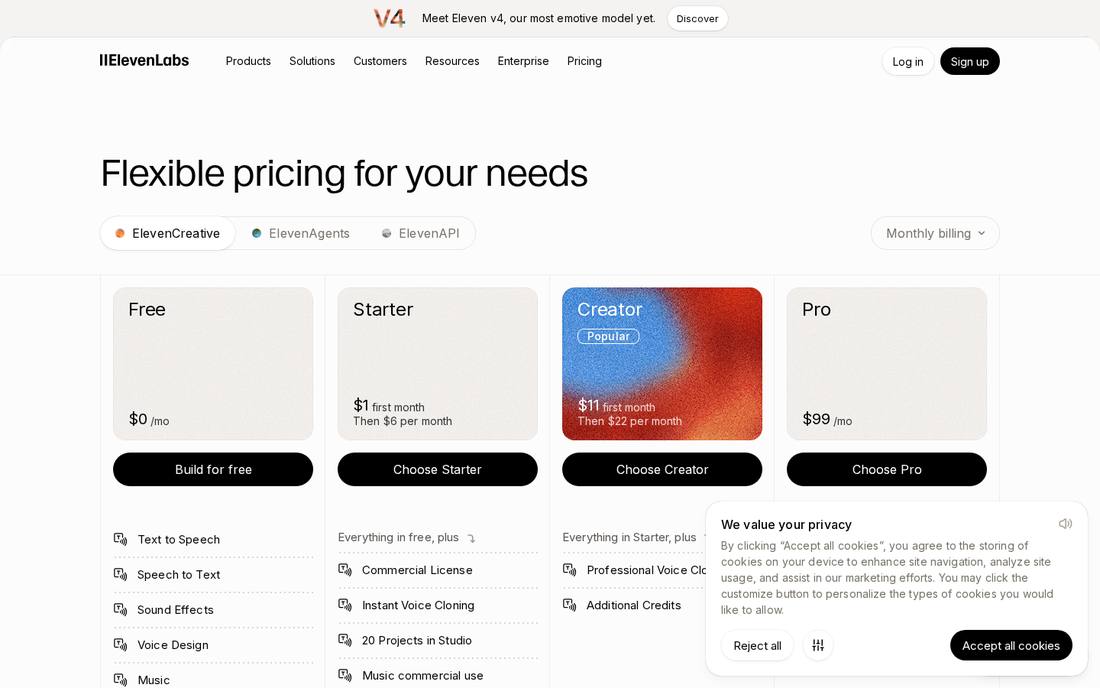
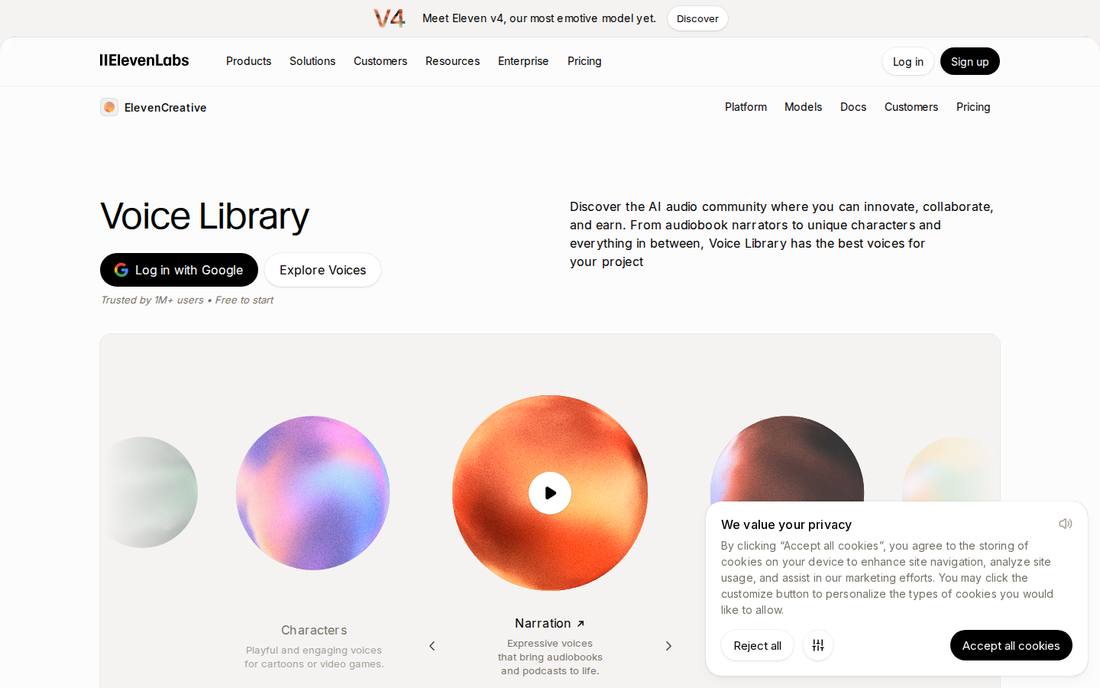
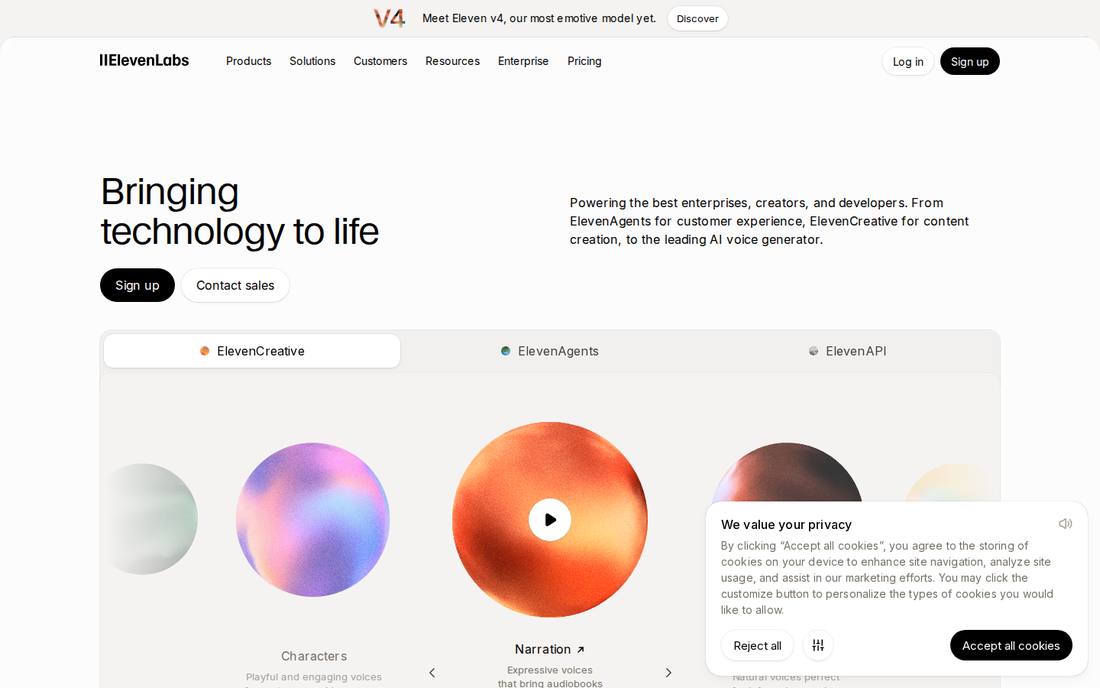
The public site is aimed at builders: the API documentation is prominent, the voice library is browsable without an account, and pricing is a ladder of character allowances rather than seats. That matters because it tells you the shape of the cost: you pay for characters, not for people, so a team of three shares one allowance.
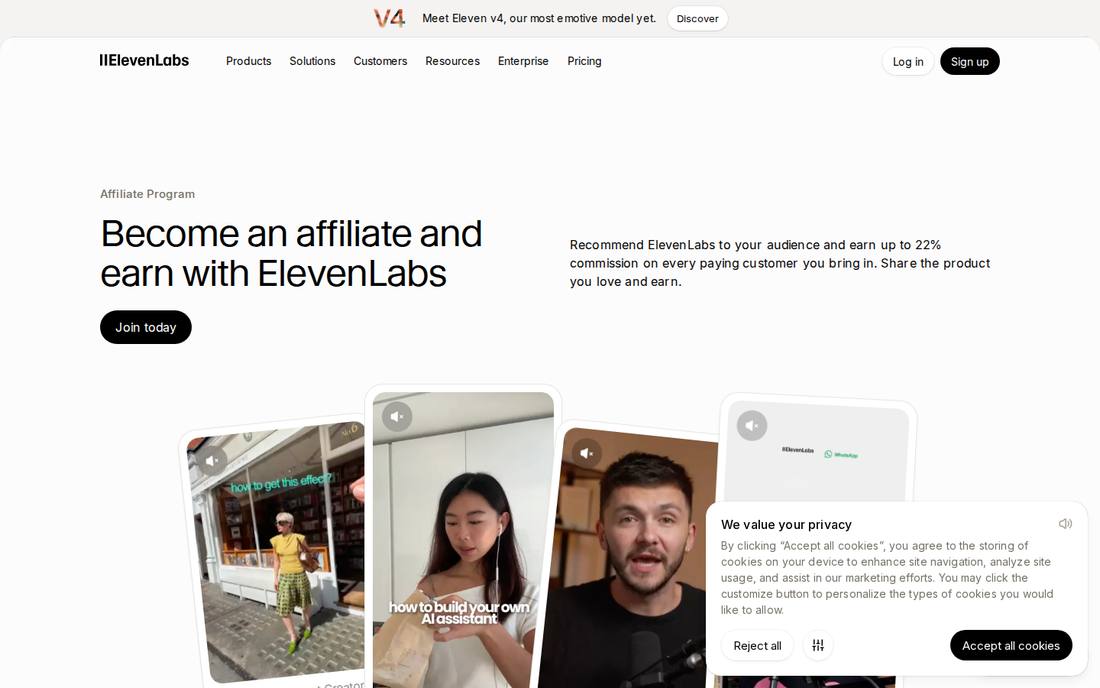
The affiliate programme is public and pays recurring commission, and VerdictMill is now enrolled in it: the buttons on this page are affiliate links, and a signup through them earns us a commission. That did not change a word of the review above - this page was written and published before we joined, and the affiliate disclosure explains the rule.
What the credits buy in practice
This is where most reviews stop being useful, so here is the arithmetic a buyer should do before choosing a tier. Speech runs at roughly 150 words per minute, and English averages about five characters per word including spaces. A ten-minute video is therefore about 7,500 characters. A weekly 30-minute podcast is about 22,500 characters per episode, or roughly 90,000 a month.
That number decides the tier far more than the feature list does. A blogger narrating one article a day sits comfortably in a low tier. A podcaster publishing weekly needs one of the higher ones, and a video team producing daily shorts will run out mid-month on anything below Pro.
Where the output still fails
- Pronunciation of names and technical terms is the recurring problem. Numbers, acronyms and product names need manual spelling or a pronunciation dictionary, otherwise a polished voice reads a product name wrong.
- Emotion is convincing but not always appropriate. The voices tend towards confident and warm; sarcasm, hesitation and dry humour are still hard.
- Long-form pacing drifts. Over a 30-minute narration the rhythm flattens, and listeners notice around the fifteen-minute mark. Splitting into paragraphs and regenerating the weak ones is the workaround.
- Cloning ethics and law are on you. Consent, disclosure and local rules about synthetic voices are the buyer's responsibility, not the vendor's.
Who it is for, and who should skip it
It fits anyone producing spoken audio at volume: video narration, course material, audiobook drafts, localisation. It fits developers who need a speech API without building a model. It fits a podcaster who wants to fix a bad recording or produce a trailer in another language.
Skip it if you need a reading assistant for documents and web pages - that is Speechify's job, and it is cheaper for that use. Skip it if you need to edit recorded audio; Descript does that better because it edits the transcript rather than generating speech. And skip it if your volume is a few hundred words a month: the free tier covers that.
How it compares with the other four
Against Speechify, ElevenLabs is a production tool and Speechify is a consumption tool: one generates voice, the other reads to you. Against Descript, ElevenLabs generates audio but does not edit recordings; Descript edits but its synthetic voices are secondary. Against Otter and Notta, there is no overlap at all - those turn speech into text, this turns text into speech.
The category comparison lives on /category/ai-audio, and the procedure behind a future score is in how we test.
Where the API pricing differs from the app
The app and the API share a character allowance but not a mental model. In the app you judge cost per video or per article; in the API you judge cost per thousand characters, because every request is billed the same way whether it is a two-word notification or a ten-minute narration. That makes the API cheaper for short, high-volume jobs (alerts, product names, accessibility labels) and more expensive than it looks for long ones, where the app's per-month allowance is easier to reason about.
Two further differences matter to developers. Concurrency - how many requests you can run at once - is a paid feature, so a batch job that needs parallelism will hit the limit before it runs out of characters. And latency varies by model: the lowest-latency voices are not always the ones that sound best, so a product that needs sub-second replies ends up choosing a voice by latency first and quality second.
What the free tier is actually for
The free tier is generous enough to evaluate and too small to ship. It is the right place to test whether a specific voice suits your brand, to generate a sample for a client, or to run the pronunciation test we have on our list. It is the wrong place to produce a podcast, because the monthly allowance disappears in a single episode and the attribution requirement pushes most commercial users to Starter.
The practical advice: use the free tier for two weeks, keep a note of how many characters each real job consumed, and multiply by four. If the answer is above the next tier's allowance, buy that tier; if it is far below, stay free and revisit when the volume changes.
Who should not use the API at all
If your audio is under a minute and produced once a week, the app is enough and the API is a distraction. If your team has no engineer, the API is a second product you would have to maintain. And if your content is mostly music, sound effects or recorded interviews, none of this applies - the API solves text-to-speech, not audio production.
The migration question: moving off a cheaper voice tool
Most people arrive here from a free or cheap text-to-speech tool, and the migration is not technical - it is a re-record. ElevenLabs cannot reuse your old audio; every line has to be regenerated in the new voice, which for a course library or an audiobook is a project, not a switch. The exception is when the new voice is a clone of the same narrator, because then the old and new audio sit next to each other without a jump in tone. That is the case where cloning pays for itself in a week.
If you are testing whether to migrate, generate one chapter, not one paragraph. The problems that appear at minute fifteen - pacing, repeated intonation, the same fall at the end of every sentence - do not appear in a thirty-second sample.
Who it replaces, and who it does not
It replaces a voice actor for drafts, for content that changes weekly, and for languages you cannot afford to record in. It does not replace a voice actor for advertising, where the performance is the product, or for anything where a human needs to be accountable for the words. The practical pattern in 2026 is a hybrid: synthetic voice for the long tail of content, human voice for the five pieces a year that define the brand.
What we have not tested - and will
Research-based review: vendor pages plus our own captures, no paid account. Open questions:
- How many characters a ten-minute narration actually consumes, measured on our own script
- Pronunciation accuracy on a fixed list of 40 technical terms
- Whether cloned voices survive a month without drift
- Real dubbing quality on a two-minute clip in a less common language
- Whether the API concurrency limits bite at normal production volume
Bottom line
ElevenLabs is the default choice if output quality matters and you can budget by characters. Start on the free tier, measure how many characters one real job consumes, and only then pick a plan - the introductory month hides the renewal price, and the renewal is what you live with.
If your need is listening rather than producing, buy Speechify. If it is editing recordings, buy Descript. If it is transcription, buy Otter or Notta. Choosing between them on price alone is how people end up paying for two subscriptions that do half a job each.
Sources
- elevenlabs.io/pricing - plans, character allowances and introductory pricing, read 13 November 2026
- elevenlabs.io/voice-library - voice catalogue, read 13 November 2026
- elevenlabs.io/affiliates - affiliate programme, read 13 November 2026



Reader reviews
Loading reader ratings...