
Jasper is the tool that made "AI copywriting" a category, and it is now priced like a marketing platform rather than a writing app. This Jasper review looks at what 59 to 69 USD a month actually buys, where the product is stronger than a general assistant, and where the cost stops making sense.
What Jasper is
A web application for generating marketing copy, built around three ideas: a trained brand voice, repeatable campaigns, and templates or agents for recurring jobs such as product descriptions, ads, emails and landing pages. It also ships a browser extension and integrations, so the output can be produced where the work already happens rather than in a separate tab.
The important difference from a general chatbot is not quality per prompt - it is consistency. Jasper stores the tone, the audience and the product facts once, then applies them to every generation, which is what a team of five writers cannot reliably do by hand.
What you see before you sign up
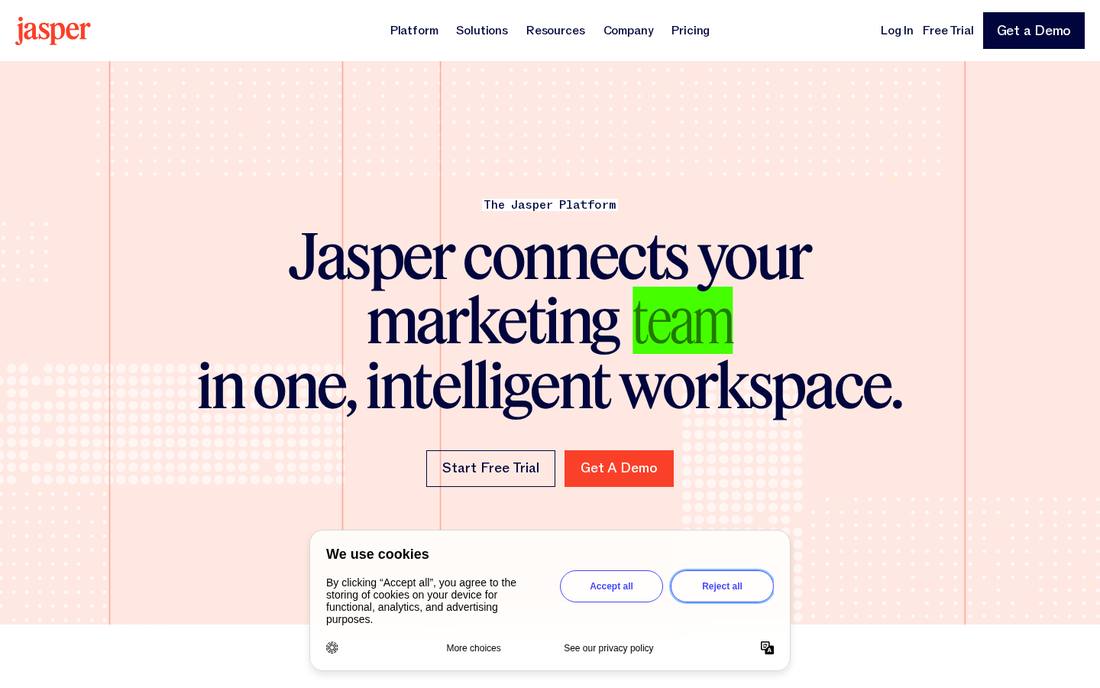
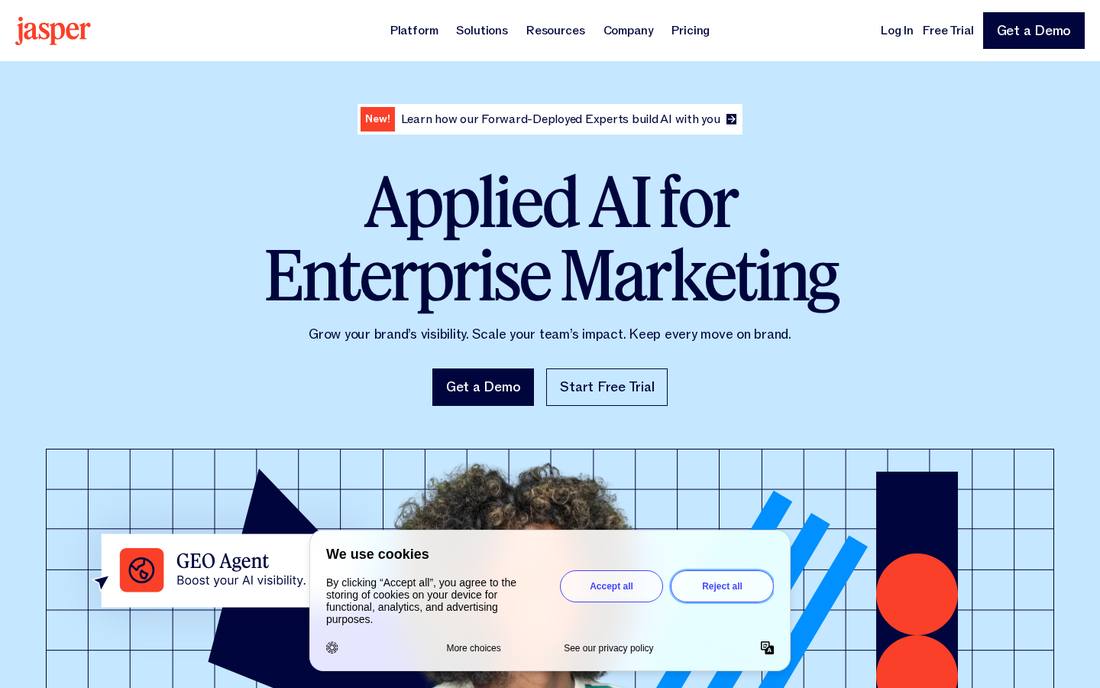
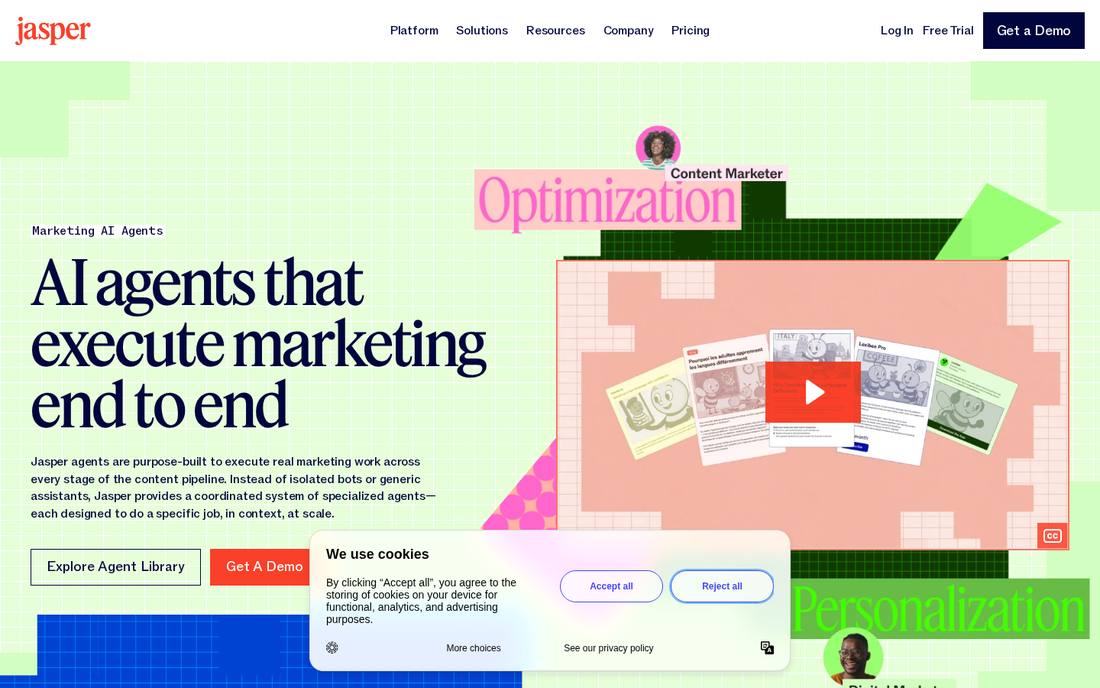
The public pages already tell you who the product is for. The homepage leads with marketing teams and results, the features page groups brand voice, campaigns and knowledge assets, and the templates page is a catalogue of pre-built jobs. Pricing is one self-serve plan plus a sales conversation, which is a fair signal: if you are one person, you are not the customer this page is written for.
How the main workflows work
A typical job runs in four steps: pick or build an agent, give it the brand voice and the product facts, generate variations, then edit. The editing step is where the money is won or lost. Jasper produces fluent copy that is usually 80% right and needs a human to remove the generic sentence and add the specific claim. Nothing in the product removes that step.
Campaigns change the shape of the work: instead of generating one asset at a time you describe a campaign once and produce the set - emails, ads, landing copy - from the same brief. That is genuinely faster than doing it by hand, and it is the feature a solo user pays for without needing.
Pricing, read carefully
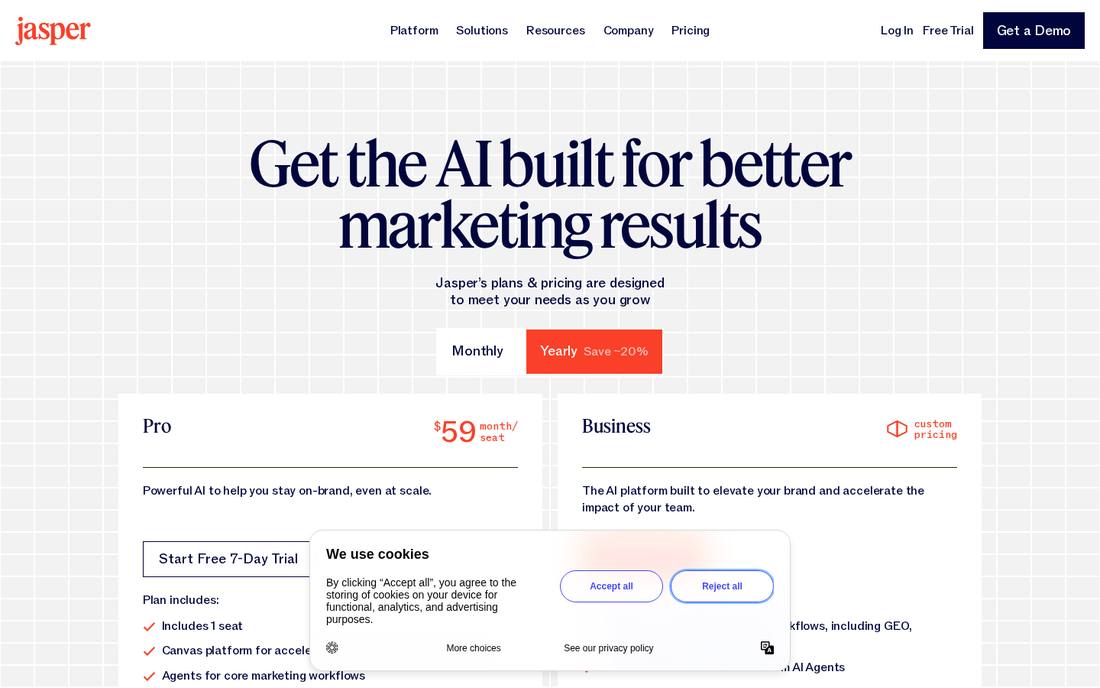
| Plan | Price | Notes |
|---|---|---|
| Pro | 59 USD/mo billed yearly, 69 USD/mo monthly | One seat, self-serve |
| Business | by quote | Teams, shared assets, admin |
Two details matter more than the headline. First, billing is per seat: a team of four is roughly 236 USD a month, which is more than most small businesses spend on their entire content stack. Second, there is no free forever tier, so the comparison with cheaper tools is not "free vs paid" but "paid vs paid".
Who it is for, and who should skip it
It fits a marketing team that already produces a lot of copy and needs it to sound consistent, or an agency producing for several brands that each need their own voice. It fits anyone who wants the work to happen in templates and campaigns rather than in a chat window.
Skip it if you write alone, if your output is a handful of articles a month, or if you need SEO scoring inside the editor. A cheaper writing tool plus a general assistant covers that at a fraction of the price, and you will not use the team features you are paying for.
How it compares with the other four
Copy.ai positions itself as go-to-market automation and prices lower per seat; Writesonic has moved toward AI search visibility rather than pure copy; Anyword sells predictive scoring of copy before you publish; Grammarly is a different product that happens to include generative features. Jasper is the most expensive per seat and the most team-shaped. Our methodology explains why none of these pages carries a score yet, and the affiliate disclosure explains how links are handled when programs are joined.
What each plan actually includes
Jasper's public plan pages are thin compared with its documentation, so here is what the vendor lists and what it means in practice. Pro is one seat with the full feature set: brand voice, campaigns, templates, the Canvas editing surface and the browser extension. Business adds seats, shared brand assets and admin controls, and is the only tier where a team can work in the same voice without passing files around. Enterprise adds the API and MCP access, which is what larger marketing operations use to push generated copy into a CMS or a product feed.
The absence of a published credit number on the Pro page is itself information: Jasper does not meter output the way Copy.ai or Writesonic do, it meters *people*. If you write a lot and alone, that pricing works against you; if you have four people producing, it works in your favour.
A real workflow, step by step
- Create the brand voice once: paste three or four examples of writing you like, plus the audience and the things you never say.
- Build or pick an agent for the job - product description, ad variant, email sequence.
- Give the agent the facts for this specific product: features, price, objection it has to overcome.
- Generate between three and five variants, not one. One variant invites you to accept it; five force you to compare.
- Edit the winner by hand - remove the generic sentence, add the specific claim, check the numbers.
- Save the edited output as an example, which is how the voice improves over time.
The step that decides quality is four, and almost nobody does it. Jasper's interface makes it easy to accept the first result, and the first result is usually the most generic one.
Where it falls short
- Facts drift. Jasper does not verify anything. If you feed it a wrong price, it will write a confident ad around that price.
- Long documents get worse. The brand voice holds for a paragraph or a page; over a long article the tone flattens and the specific claims thin out.
- No SEO layer. There is no keyword coverage check, no internal link suggestion, no score against search intent.
- Export friction. Unless you are on Enterprise with API access, output lands in the editor and you copy it out.
Cheaper and more expensive alternatives
Cheaper: Copy.ai at 24 USD a month billed yearly, Writesonic's Starter at 79 USD but with article generation included, or a general assistant for a fraction of either. More expensive: an agency retainer, which is what Jasper quietly competes with when it sells "marketing platform" rather than "AI writer". The honest framing is that Jasper replaces a *process*, not a *writer* - and processes are expensive.
Questions we get
Do I need Jasper if I already pay for ChatGPT or Claude? For a solo writer, no. The difference is stored brand voice and repeatable campaigns, which a chat window does not give you.
Is the 7-day trial enough? Only for a narrow job. Pick one real task, run it twice, and judge the editing time rather than the first draft.
Can two people share one seat? Not in practice - the licence is per seat, and sharing it breaks the audit trail that Business is sold on.
Does it work in other languages? The interface and generation work, but the brand voice examples you upload decide quality, and English examples do not transfer cleanly to a German or Serbian tone.
What we have not tested - and will
Research-based review: vendor pages plus our own captures, no account created. Open questions:
- Output quality against the same brief in Copy.ai, Writesonic and Anyword
- How much editing a Jasper draft needs before publication
- Whether brand voice survives long documents or drifts after a few hundred words
- Real per-seat cost for a team of four over a year, including any usage limits
- What the affiliate program actually pays and whether it changes anything we publish
Bottom line
Jasper is the safest choice for a team that needs one voice across many hands, and the most expensive way to write a blog post alone. If you are an individual writer, start with a cheaper tool and only move up when consistency across people becomes the problem you actually have.
Sources
- jasper.ai/pricing - plans and prices, read 13 November 2026
- jasper.ai/features - brand voice, campaigns, agents, read 13 November 2026
- jasper.ai/affiliates - affiliate program page exists, read 13 November 2026







Reader reviews
Loading reader ratings...