
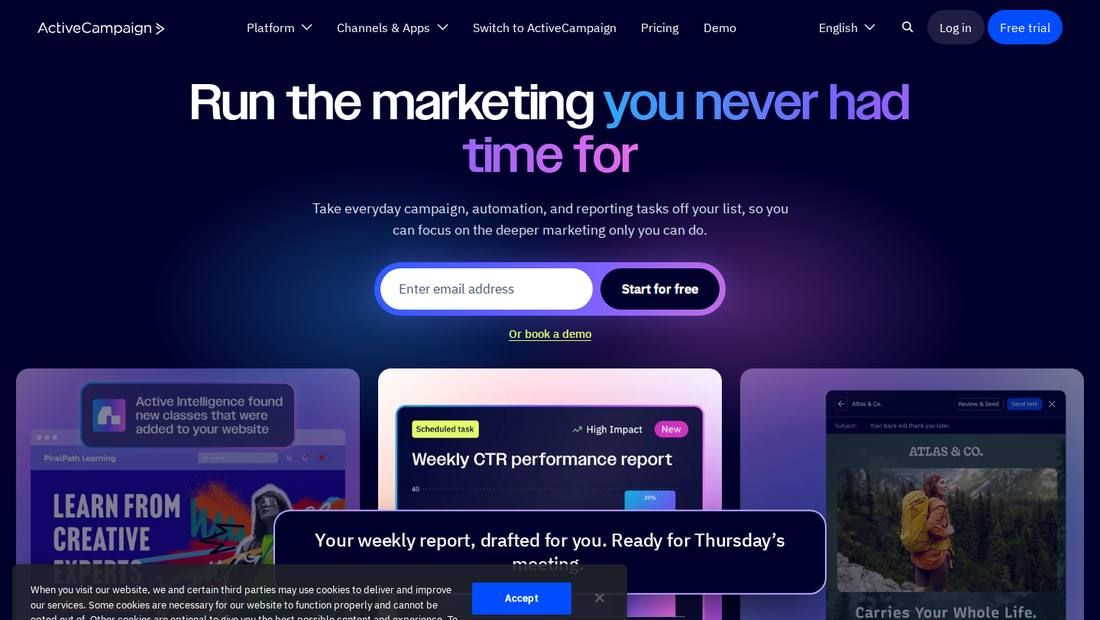
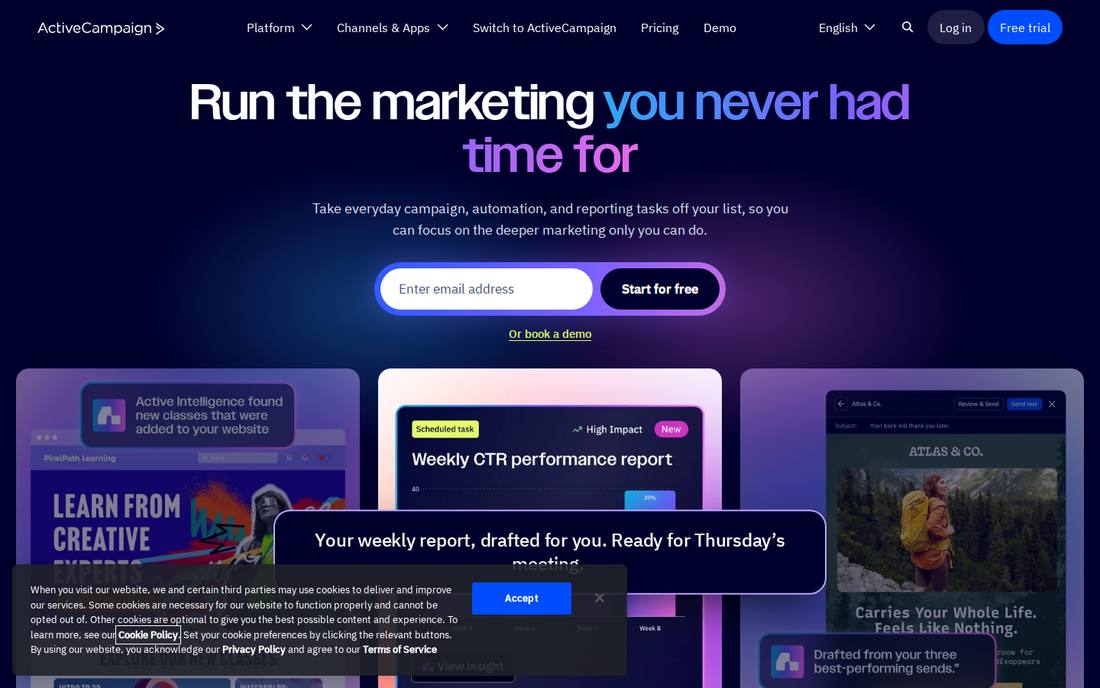
ActiveCampaign is the email tool people move to when a spreadsheet stops being enough. This activecampaign review is about what the automation actually does, why it costs three times what a simple sender does, and the businesses that should not pay for it.
What ActiveCampaign is
An email marketing platform built around a visual automation builder, with a CRM attached. You build automations by connecting triggers, conditions and actions: a form submitted, a link clicked, a page visited, a deal moved. The builder is the product; email is one of the actions it can take.
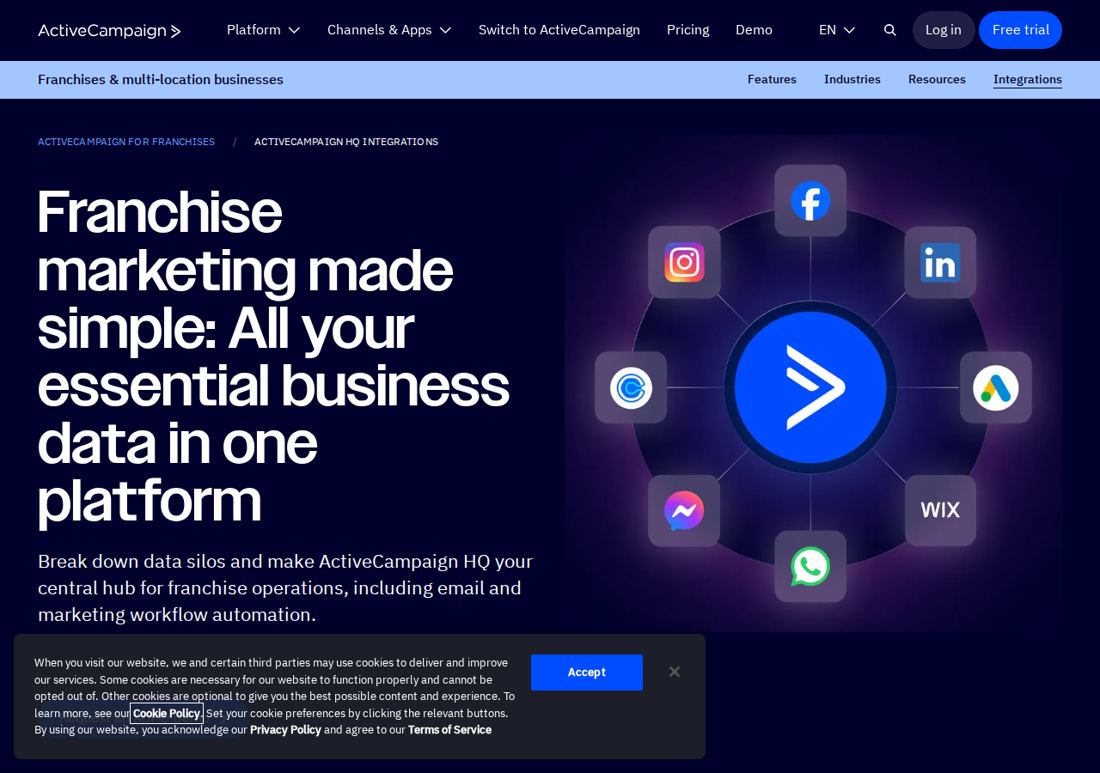
Around it sit campaigns, SMS credits, site tracking, lead scoring on higher tiers, and more than 900 integrations. The CRM with pipelines arrives on Plus, which is where the "customer experience platform" language on the homepage starts to be literal.
What you see before you sign up
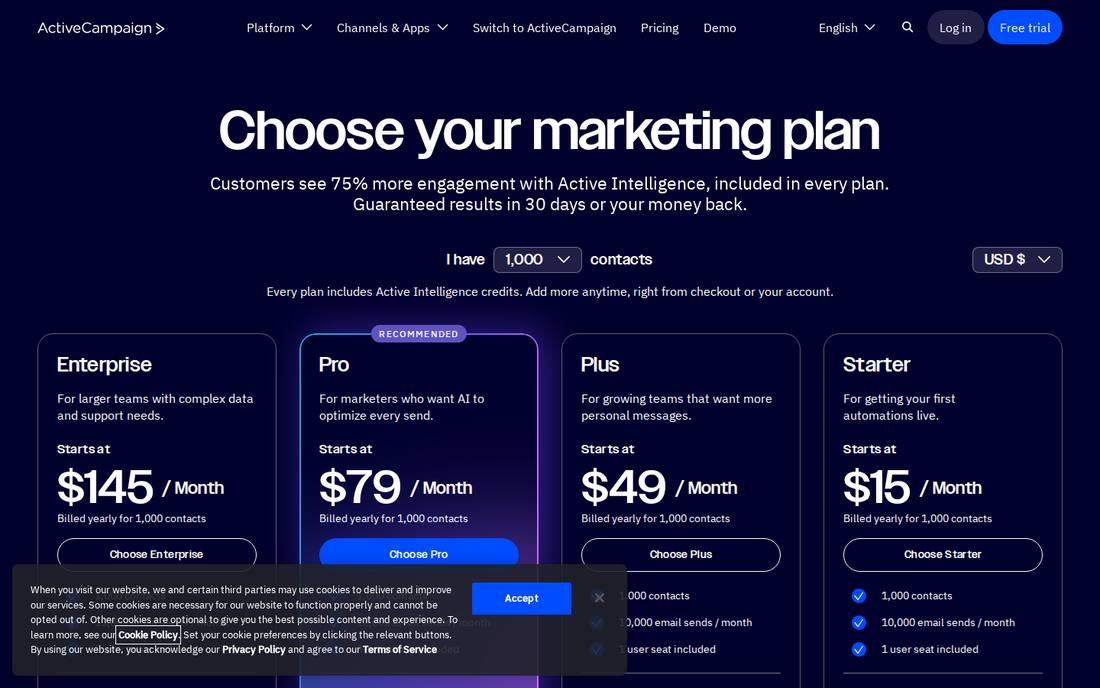
There is no free plan, only a 14-day trial, and that is a deliberate signal: this product is sold to businesses with a process, not to hobbyists. Pricing is four tiers at 15, 49, 79 and 145 USD per month billed yearly, with contact bands above 1,000.
The pricing page is clearer than most about what separates the tiers - automation on all of them, CRM from Plus, predictive sending and attribution from Pro - and it does not pretend the entry tier is complete.
We are not enrolled in ActiveCampaign's affiliate programme, so nothing here earns a commission; the affiliate disclosure explains how that is marked if it changes.
What the automation actually does
Three capabilities matter and none of them exist properly in the cheaper tools. Branching on behaviour: if a contact visits the pricing page twice in a week, do something different. Goals: an automation stops when somebody buys, instead of continuing to send them an offer. Splits: run two versions of the same sequence and let the results decide.
Those three turn email from a newsletter into a system. They also require you to think about your funnel before you build, which is why many buyers pay for ActiveCampaign and then use it like MailerLite.
Where it fails
- Price without a free tier. 15 USD monthly is small, but the trial is the only way to test, and 14 days is short for a system that needs building.
- The learning curve is real. Automations reward planning; a business without a defined funnel builds a spaghetti diagram and abandons it.
- Contact-band jumps. Growing from 1,000 to 2,500 contacts raises the bill by roughly half again.
- Email editor is competent, not delightful. It is not the reason to buy, and it shows.
- CRM is basic compared with a dedicated pipeline tool; it is a convenience, not a replacement.
Who it is for, and who should skip it
It fits a business with a repeatable sales process: a course with a launch sequence, a SaaS with onboarding, an agency with a lead-nurturing funnel. It fits anyone whose emails should change based on what the recipient did.
Skip it if you send a weekly newsletter and nothing else - Brevo at a third of the price does that. Skip it if your team will not maintain the automations, because a broken sequence is worse than no sequence. And skip it if the budget is fixed under 200 USD a year; the maths does not stretch.
How it compares with the other three
Against Brevo, the split is depth against price: Brevo sends for a fifth of the cost, ActiveCampaign automates. Against MailerLite, both are approachable, and ActiveCampaign's advantage is the builder plus the CRM, at double the entry price. Against GetResponse, ActiveCampaign is the deeper automation tool, while GetResponse bundles webinars and a stronger free tier.
The category is compared on /category/email, and the test procedure behind a future score is in how we test.
A realistic build order
Start with one automation: a welcome sequence with three emails and a goal of "first purchase". Add site tracking. Then add a second automation for people who visited pricing and did not buy. Everything else can wait. Teams that build ten automations in month one usually maintain none in month three.
Deliverability and the technical setup
Domain verification, DKIM, SPF and a dedicated sending domain are all available; the first three are on you, the last is the difference between a shared reputation and your own. ActiveCampaign's dashboard reports reputation by domain, which is more visibility than a cheap sender gives you.
What it does not do is write your subject lines or fix a list that was bought rather than earned. No platform survives a purchased list.
What we have not tested - and will
Research-based review: public pages plus our own captures, no account. Open questions:
- How long a three-email welcome sequence takes to build from scratch
- Whether site tracking works without a cookie-consent plugin conflict
- Deliverability for 1,000 recipients on the shared IP
- Actual price at 2,500 and 5,000 contacts
- Whether the predictive sending on Pro measurably beats send-time optimisation
Bottom line
ActiveCampaign is worth 15 USD a month when you have a funnel to automate and the discipline to maintain it. Without that, it is an expensive newsletter sender.
If you are unsure, run the trial, build exactly one automation, and see whether it earns anything in two weeks. If it does not, Brevo or MailerLite will serve you better at a fraction of the cost.
Sources
- activecampaign.com/pricing - tiers, yearly prices and contact bands, read 13 November 2026
- activecampaign.com/features - automation builder, CRM and integrations, read 13 November 2026
- activecampaign.com/pricing - plan tiers and contact limits, read 23 November 2026
The CRM question
The CRM is the second reason people buy and the first thing they ignore. Deals with stages, tasks and a contact timeline are genuinely useful if your sales happen in conversations; they are dead weight if your site sells with a checkout button. Decide which business you are before choosing Plus over Starter, because the 34 USD difference per month buys a pipeline you will either use daily or cancel.
What the 14-day trial should be used for
Not for touring features. Build one automation end to end, connect a form, send a test, and watch a contact move through it. If that takes more than two evenings, the tool is heavier than your process and a simpler sender is the honest answer. If it takes an evening and works, the trial has told you everything the pricing page could not.
Who renews
The accounts that renew are the ones where an automation produced revenue in the first quarter - a welcome sequence that converted, a win-back that recovered a customer. The accounts that leave built a diagram, never wired a form to it, and spent a year paying 15 USD for a newsletter.
Pricing at the next band
Moving from 1,000 to 2,500 contacts raises Starter by roughly half, and to 5,000 by roughly double. That is the moment to compare against Brevo's volume model: if the list is quiet, contact pricing is a tax; if the list is active and the automation converts, it is the cost of a system that works.
The editor and the sending experience
Campaigns are built in a drag-and-drop editor that handles the basics competently: blocks, conditional content, personalisation and dynamic sections for segments. It is not as quick as MailerLite's and not as flexible as an HTML export, and for most business email that is the correct trade.
Sending gives you the reports that matter: opens, clicks, revenue attributed where the integrations allow, and per-automation performance. Reading those weekly is what turns the subscription from a cost into a feedback loop.
A short buyer checklist
Confirm the contact band you will land in, whether the CRM is needed on day one, whether you can maintain one automation per month, and whether your checkout or CRM integrates without a middleware service. Four answers decide the tier and whether the product fits at all.
The short version
If you have a funnel and will maintain it, ActiveCampaign earns its 15 USD quickly. If you have a newsletter, buy Brevo and spend the difference on content.
One final note on the trial: export your contacts before day twelve, not after. Any platform can be left in an afternoon when the list is yours, and that single habit makes every future tool decision reversible.














Reader reviews
Loading reader ratings...